
Live Wheel Games vs Crypto Wheel: What’s the Difference?
 Nathan Williams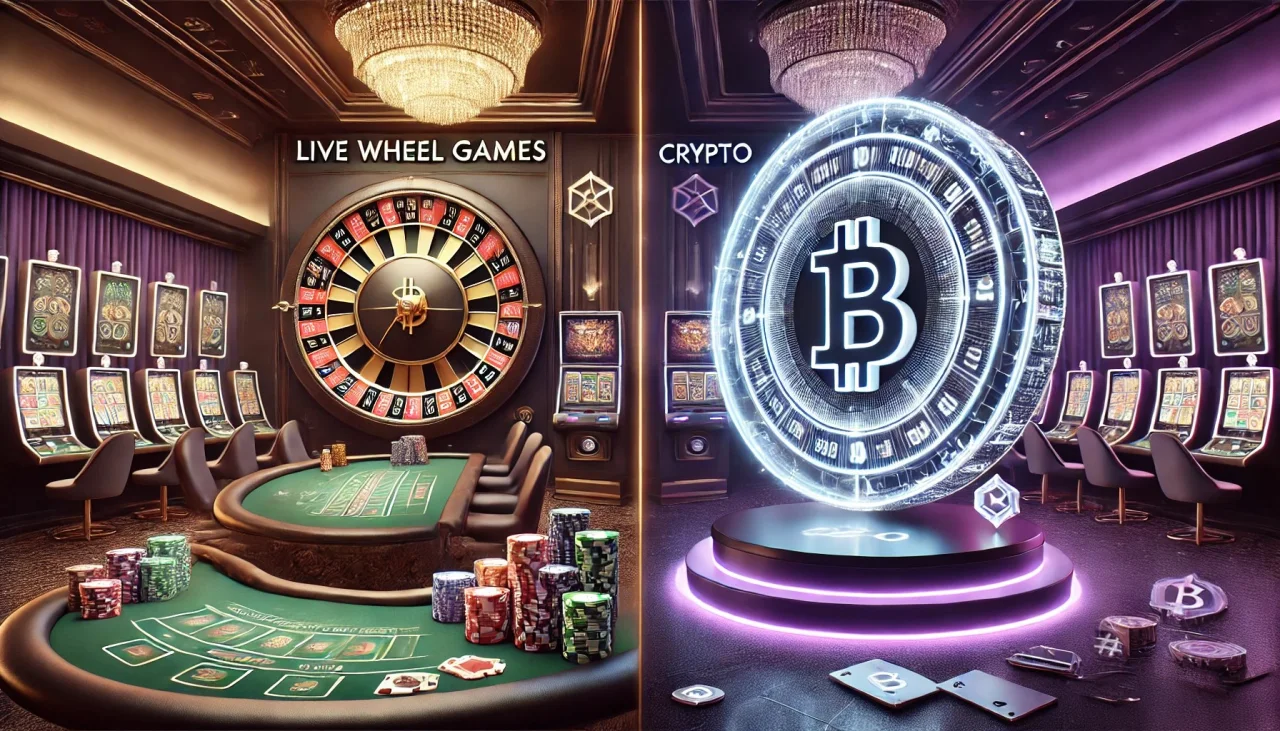
What This Page Solves: You've seen both live-hosted wheel games and crypto wheel games available on casino platforms and you're not sure what's actually different between them — beyond the obvious. This guide breaks down exactly how each format works, how fairness is guaranteed in each, what the payout structures look like, and which type suits which kind of player. No fluff — just a clear, honest comparison from a team that has tested both formats extensively.


The wheel is the same shape. The experience of spinning it couldn't be more different.
Live wheel games and crypto wheel games both offer the core proposition of a spinning wheel and a potential payout. But beneath that surface similarity, they operate on fundamentally different principles — different fairness models, different entertainment structures, different payout mechanics, and different relationships between the player and the game.
We've spent time testing both formats across multiple platforms. What we found is that the choice between them isn't really about which is better in absolute terms — it's about which is better for you specifically. A player who values the social atmosphere of a live studio broadcast, host interaction, and the suspense of a physical wheel has genuinely different needs from a player who wants instant results, mathematical verification of fairness, and complete autonomy over when and how they play.
This guide maps out every meaningful difference between the two formats so you can make that choice with clear information rather than guesswork.
The Core Distinction: How Each Format Actually Works
Before comparing specific features, it's worth being precise about what each format actually is — because the terminology gets blurry in marketing materials.via live chat, explain results, build anticipation for bonus rounds, and maintain the broadcast's energy
- Live wheel games are real-time broadcast events hosted by professional presenters in purpose-built studio environments. A physical wheel exists and physically spins. The outcome is determined by where the wheel stops, with digital RNG elements integrated into certain bonus features. Evolution Gaming's Dream Catcher and Crazy Time are the most prominent examples — live casino game shows that air on a schedule, with human hosts driving the experience.
- Crypto wheel games are automated, blockchain-powered games in which outcomes are generated by provably fair algorithms. There is no human host, no physical studio, and no broadcast schedule. The player initiates a spin via a smart contract; the outcome is generated and cryptographically verified, and the result is instant. Platforms like Stake.com and BC.Game have made this format mainstream.
The fundamental difference our team keeps returning to: live wheels are entertainment products that happen to involve gambling. Crypto wheels are gambling products with a minimal entertainment layer. Neither description is a criticism — they're just accurate characterizations of what each format prioritizes.
Fairness Models: Two Completely Different Approaches to Trust
This is the most technically significant difference between the formats, and it's one that genuinely matters to players who think carefully about where they're putting their money.
How Live Wheels Establish Fairness
Live gambling authorities — primarily the Malta Gaming Authority (MGA) and the UK Gambling Commission (UKGC) — certify that live wheel games operate within defined fairness parameters. The physical wheel is regularly maintained, calibrated, and independently audited. Digital RNG elements integrated into bonus features (like the multiplier segments in Crazy Time) are separately certified.
The trust model here is institutional: you trust the operator because they're licensed by a regulatory body that has verified their systems and holds them accountable for continued compliance. This is a well-established model that has protected players in regulated gambling markets for decades.
How Crypto Wheels Establish Fairness
Provably fair technology represents a fundamentally different philosophical approach to trust. Instead of relying on institutional oversight, crypto wheels use cryptographic hash functions that allow any player to independently verify that the outcome of any spin was predetermined before they placed their bet and wasn't altered afterward.
The process works through seed exchange: before each spin, the platform generates a server seed (hashed and shared with the player), the player provides a client seed, and the two are combined to produce the outcome. After the spin, the server seed is revealed and the player can verify the calculation themselves. This makes retroactive manipulation mathematically impossible — not just against the rules, but genuinely impossible.
The trust model here is mathematical: you don't need to trust the operator because you can verify the result yourself, independently, without relying on any third party.
Aspect | Live Wheels | Crypto Wheels |
|---|---|---|
Verification method | Regulatory bodies and audits | Blockchain hash verification |
Transparency | Regular independent audits | Real-time player verification |
Trust model | Licensed operators and institutions | Smart contracts and mathematics |
Player verification ability | None directly | Full — every spin |
Regulatory oversight | Mandatory | Minimal to none |
Our honest assessment from testing both: the provably fair model is technically superior in terms of verifiability. But institutional regulation provides protections that provably fair technology doesn't — dispute resolution, responsible gambling requirements, and operator accountability beyond game mechanics. Neither model is universally better; they address trust from different angles.
Gameplay Structure: Broadcast Events vs Instant Autonomy
Live Wheel Games: The Broadcast Model
Live wheel games operate as scheduled entertainment. Games run continuously, but the pace is set by the host — not the player. Between spins, hosts interact with players through live chat, explain results, build anticipation for bonus rounds, and maintain the energy of the broadcast. The social layer is a core product feature, not an add-on.
Evolution Gaming's Crazy Time is the benchmark for this format — four separate bonus games triggered by wheel segments, each with their own mechanics and multiplier structures. The host's role during these bonus rounds isn't just presentational; the interaction with the bonus game is genuinely part of the entertainment value. Dream Catcher, the simpler predecessor, demonstrates the format's fundamentals: a large physical money wheel, fixed multiplier segments, and real-time broadcast.
When we tested live wheel games across our team, the consistent finding was that the entertainment value was genuine — watching a Crazy Time bonus round unfold with a skilled host creates real excitement that a static interface doesn't replicate. But that entertainment comes with a pace constraint: you're operating on the broadcast's schedule, not your own.
Crypto Wheel Games: The Instant Model
Crypto wheels invert the control entirely. There is no broadcast, no host, no schedule. The player initiates every spin on their own timeline. Smart contracts execute instantly. Results are immediate. The interface is typically minimal — wheel graphic, bet controls, results display — with no extraneous entertainment layer.
Popular live casino platforms that have implemented crypto wheel formats report that this instant-play model attracts a distinct player profile: those who want high volume, fast results, and the ability to play exactly when and how they want without waiting for a broadcast to catch up.
The trade-off our team identified: the speed and autonomy of crypto wheels creates a higher-frequency betting environment than live games. That autonomy is a feature for disciplined players and a risk for those prone to session overrun. We'll come back to this in the responsible gambling section.
Payout Structures: Segment Volatility vs Algorithmic Multipliers
Live Wheel Payout Mechanics
In live wheel games, payout potential is visually transparent — you can see exactly what each segment pays before the wheel spins. This "segment-based volatility" creates tangible anticipation: as the wheel slows, you can watch it approach high-value segments in real time.
The volatility profile varies significantly by game. Dream Catcher's wheel includes segments paying 1x, 2x, 5x, 10x, 20x, and 40x, plus 2x and 7x multiplier segments that modify the next spin's payouts. Crazy Time's bonus games — Cash Hunt, Pachinko, Coin Flip, and the Crazy Time bonus itself — can produce multipliers reaching into the hundreds. Our team has tracked sessions where the Crazy Time bonus wheel has paid 4,000x to top segments.
The RTP (Return to Player) figures for live wheel games vary by game and bet type. Dream Catcher's base game RTP is approximately 96.08%. Crazy Time's overall RTP is approximately 96.08% averaged across all bet types, but individual bet RTPs vary from around 94.33% (5 segment) to 96.55% (1 segment).
Crypto Wheel Payout Mechanics
Crypto wheel payouts are generated through algorithmic functions rather than physical wheel mechanics. The multiplier you receive is a mathematical output of the provably fair system rather than a segment you watched the wheel land on.
This creates a different psychological experience — the outcome is instant and mathematical rather than physical and suspenseful. Many crypto wheel implementations offer more extreme variance than live wheels, with lower-frequency very high multipliers that would be impractical to display on a physical wheel. Some crypto wheel formats include multipliers in the thousands on rare outcomes.
The house edge in crypto wheel games varies significantly by platform and implementation. Some provably fair platforms publish their exact house edge — typically between 1% and 4% — which allows direct comparison with live game RTPs.
Entertainment Value: What You're Actually Paying For
This is where the choice becomes genuinely personal rather than analytical.
Live wheel games deliver:
- Dynamic host personalities that vary the experience across sessions
- Interactive chat features that create a social layer
- Studio atmosphere with professional production quality — lighting, multiple camera angles, sound design
- Multiplayer excitement — visible bet statistics showing what other players are wagering
- Real-time reactions and celebratory moments that are genuinely engaging
- The physical drama of watching a wheel slow toward a segment
Crypto wheel games deliver:
- Rapid gameplay — spins can run in seconds rather than minutes
- Clean, minimal interfaces with no distraction from the core game mechanics
- Immediate results with no waiting for host commentary
- Complete personal control over session pace and volume
- Mathematical certainty about fairness without needing to trust any third party
💡 Tip: Before choosing a wheel game type, learn how to play live wheel games to understand the full live format experience. Understanding both formats fully before committing to either is worth the time.
The Hybrid Future: Where Both Formats Are Heading
The boundary between live and crypto wheel formats is becoming less defined. Several developments are pushing both categories toward convergence:
- Blockchain-verified live games — Some live wheel providers are integrating blockchain verification elements into their regulated games, allowing players to verify live game outcomes in ways previously only possible in crypto formats.
- Social crypto games — Certain crypto platforms are adding live host elements, chat features, and scheduled broadcast-style events to their instant-play formats, borrowing entertainment architecture from the live casino model.
- Cryptocurrency payments in traditional live casinos — An increasing number of licensed live casino platforms are accepting Bitcoin and other cryptocurrencies as payment methods while maintaining their traditional live dealer format — combining crypto payment infrastructure with regulated live gameplay.
- Enhanced mobile optimization — Both formats are moving toward mobile-first design, with live studio streams optimised for mobile viewing and crypto interfaces built around touch-screen interaction.
Our team's expectation is that the most successful platforms over the next few years will be those that combine elements of both: the social engagement and entertainment production of live formats with the transparency and autonomy of provably fair technology. The first platforms to genuinely execute that hybrid well will have a meaningful competitive advantage.
Responsible Gambling Considerations: Format Matters
This is a consideration most comparison guides skip — and it's worth including honestly.
The format of a wheel game has genuine implications for responsible gambling beyond the standard advice about setting limits.
- Live wheel games have a natural pace limit. The broadcast structure, host commentary, and spin intervals create inherent delays between bets. A live wheel game might produce 30–40 spins per hour. That frequency is an implicit brake on spending that the format builds in automatically.
- Crypto wheel games can run at whatever pace the player sets. In a high-frequency session, hundreds of spins per hour are possible. That autonomy is the product's appeal — but it also means the player is entirely responsible for managing their own session pace without any structural brake from the game format itself.
If you're prone to session overrun or find yourself betting more than intended in extended sessions, the live format's inherent pace limitations provide a degree of natural protection that the crypto format doesn't. This isn't a reason to avoid crypto wheels — it's a reason to set session limits before you start, not after.
Every regulated live casino platform offers deposit limits, loss limits, session time limits, and self-exclusion tools. Use them proactively, particularly in faster-format games.
Which Should You Choose?
Choose live wheel games if you:
- Value social interaction and host-driven entertainment as part of the experience
- Prefer a traditional casino atmosphere with production quality
- Want to play in a regulated environment with institutional oversight
- Enjoy the physical drama of a real wheel spinning in real time
- Are happy to operate on the broadcast's schedule rather than your own
Choose crypto wheel games if you:
- Prefer instant play and complete control over session pace
- Want mathematical verification of fairness rather than regulatory trust
- Use cryptocurrency as your primary payment method
- Prefer minimal-distraction interfaces focused purely on the game mechanics
- Value speed and autonomy over entertainment and social features
Conclusion: Two Legitimate Formats, Different Priorities
Both live wheel games and crypto wheel games are legitimate, well-developed gaming formats. The choice between them isn't a quality judgment — it's a preference match.
What our team's testing has consistently confirmed: players who choose their format deliberately, based on what they actually value in a gaming session, report better experiences than those who play both formats interchangeably without thinking about what each one is built for. Taking five minutes to identify your actual priorities — entertainment vs. autonomy, institutional trust vs. mathematical verification, social experience vs. instant play — will meaningfully improve your overall experience with either format.
The wheel will always spin. The question is which version of that experience you want built around it.
Editorial Note: This guide was researched and written by the LiveCasinoRank editorial team based on direct testing of live wheel and crypto wheel formats across multiple platforms. RTP figures are accurate at time of publication and subject to change. This content is for informational purposes only. Gamble responsibly.
Frequently Asked Questions
What Is the Main Difference Between Live Wheel Games and Crypto Wheel Games?
Live wheel games are broadcast events hosted by professional presenters in real studio environments — a physical wheel spins in real time and you watch it happen live. Crypto wheel games are automated, blockchain-powered games where outcomes are generated instantly through provably fair algorithms with no human host involved. The core difference isn't just visual: live games prioritise social entertainment and institutional trust; crypto games prioritise speed, autonomy, and mathematical verification of fairness. Both are legitimate formats — they're just built for different player preferences.
Can I Use Traditional Currency in Crypto Wheel Games?
Most crypto wheel games require digital currencies — Bitcoin, Ethereum, and similar cryptocurrencies are standard. However, this is changing. An increasing number of hybrid platforms accept both fiat and cryptocurrency, and some traditional live casinos are beginning to add crypto payment options alongside their standard banking methods. If you want to play crypto wheel games but prefer to use traditional currency, check whether the platform offers a fiat option before registering — more do now than did two years ago.
Is the Gameplay Experience Different Between Live and Crypto Wheel Games?
Significantly. Live wheel games provide immersive real-time broadcasts with professional hosts, multiple camera angles, interactive chat, and the physical drama of watching a large wheel decelerate toward a segment. That entertainment layer is a genuine part of the product. Crypto wheel games are minimal and instant — you initiate a spin, the result appears immediately, and there's no host commentary or social dimension. If you want an engaging, theatrical experience, live formats deliver it. If you want fast, uninterrupted gameplay with complete personal control, crypto formats deliver that instead.
Are Hybrid Wheel Games Becoming More Common?
Yes — the boundary between live and crypto formats is blurring. Some live wheel providers are integrating blockchain verification into their regulated games. Certain crypto platforms are adding live host elements and chat features to their instant-play games. An increasing number of licensed live casinos accept cryptocurrency payments. The trend toward hybrid models combining live entertainment with provably fair verification is accelerating, and it's likely that the most competitive platforms in the coming years will combine elements of both formats rather than staying purely in one category.
Are Crypto Wheel Games Safer Than Live Wheel Games?
They offer different kinds of safety rather than one being objectively safer than the other. Crypto wheel games use provably fair algorithms that allow you to independently verify every spin outcome through blockchain hashing — manipulation is mathematically impossible, not just against the rules. Live wheel games rely on licensed operators and regulated random number generators certified by bodies like the Malta Gaming Authority or UK Gambling Commission. That institutional model provides protections beyond game mechanics — dispute resolution, responsible gambling requirements, and operator accountability — that provably fair technology doesn't address. Which model suits you depends on whether you prefer mathematical verification or institutional oversight.
Which Offers Better Payouts: Live or Crypto Wheel Games?
The answer depends on which specific games you compare. Live wheel games like Dream Catcher have RTPs around 96.08%, while Crazy Time's RTP varies by bet type from approximately 94.33% to 96.55%. Some provably fair crypto wheel platforms publish house edges of 1–4%, which can represent better expected return than some live games. Crypto wheels also tend to offer more extreme variance — lower probability of very high multipliers — which can produce larger individual payouts but over longer sessions may not outperform the live format. The better question is not which pays more on average, but which variance profile suits your playing style.
Are Bonuses Different in Live and Crypto Wheel Games?
Yes, meaningfully so. Crypto casinos typically offer generous deposit match bonuses, reload bonuses, and rewards for using specific digital currencies — the bonus structures are often larger in percentage terms than traditional casino offers. Live casinos tend to provide loyalty programmes, cashback schemes, and game-specific promotions tied to particular titles. It's worth noting that bonus terms and wagering requirements differ significantly between platforms and can substantially affect the real value of any offer. Always read the terms before factoring a bonus into your platform choice.


